
Vancouver is an easy city to photograph. Between the mountains, the water, and the gardens, you’re rarely far from a good shot. We’ve pulled together the spots we keep coming back to, with notes on when to go and what each one does best.
Queen Elizabeth Park: City Views and Blooming Trees
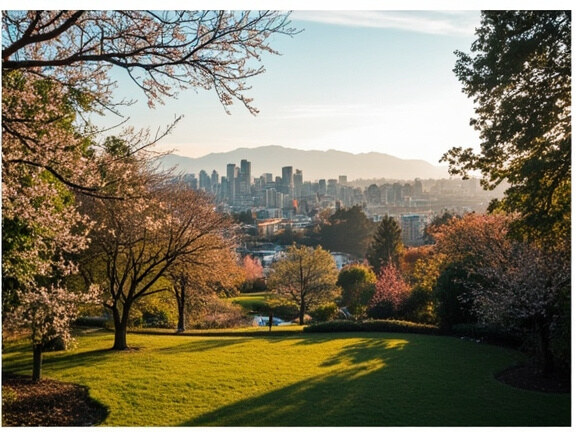
Queen Elizabeth Park sits on the highest point in the city, which makes it the best place to shoot the downtown skyline with the North Shore mountains behind it. The main plaza looks straight out over the towers, and the view is at its best in the hour before sunset, when the light goes warm and the buildings start to glow.
Below the plaza, the Quarry Garden fills a former rock quarry with winding paths and dense planting, and the small pond there gives you clean reflections on a still morning. Cherry and plum blossoms come out across the park in spring, which is the easiest time to get a flowering foreground against the city. For a warm, controlled setting in any weather, the domed Bloedel Conservatory next to the plaza is worth the small admission, with tropical plants and free-flying birds inside. The park is open daily from early morning to 10:00 pm.
VanDusen Botanical Garden: Ponds, Bridges, and Blooms
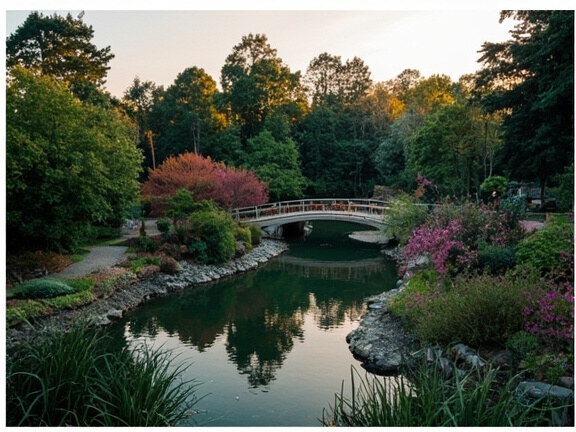
VanDusen (5251 Oak Street) is the garden to visit when you want water, stone, and greenery in the same frame. The grounds wind around several ponds crossed by stone bridges, and the still water holds reflections well in the morning before the wind picks up. There’s a different plant in bloom through most of the year, from spring blossom to the laburnum walk in late May, so the garden changes a lot depending on when you go. It’s a paid garden, open daily 9:00 am to 7:00 pm, and the paths are easy to walk with camera gear.
Gastown: Urban Character and the Steam Clock
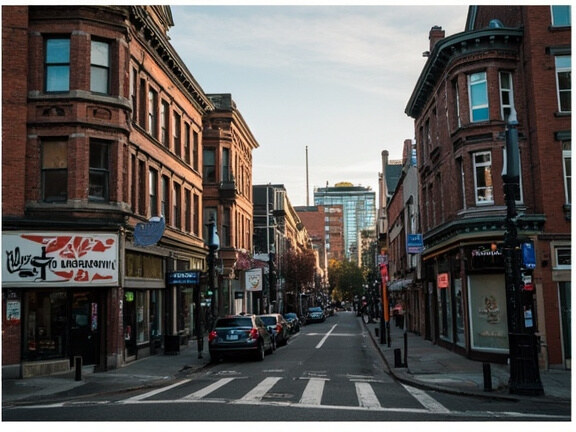
For city and architecture shots, Gastown has the most character downtown. The Steam Clock (305 Water Street) is the obvious landmark, and it puts on a show every fifteen minutes when it whistles and lets off steam, which is worth waiting for if you want people and movement in the frame. The cobblestone streets and old brick buildings around it photograph well in any direction. It’s a busy, touristy corner, so early morning is the time to go if you want the streets quieter. Overcast days, which Vancouver has plenty of, give you soft, even light with no harsh shadows, and blue hour works well here against the lit storefronts.
Stanley Park Rose Garden: Arbours and Climbing Roses
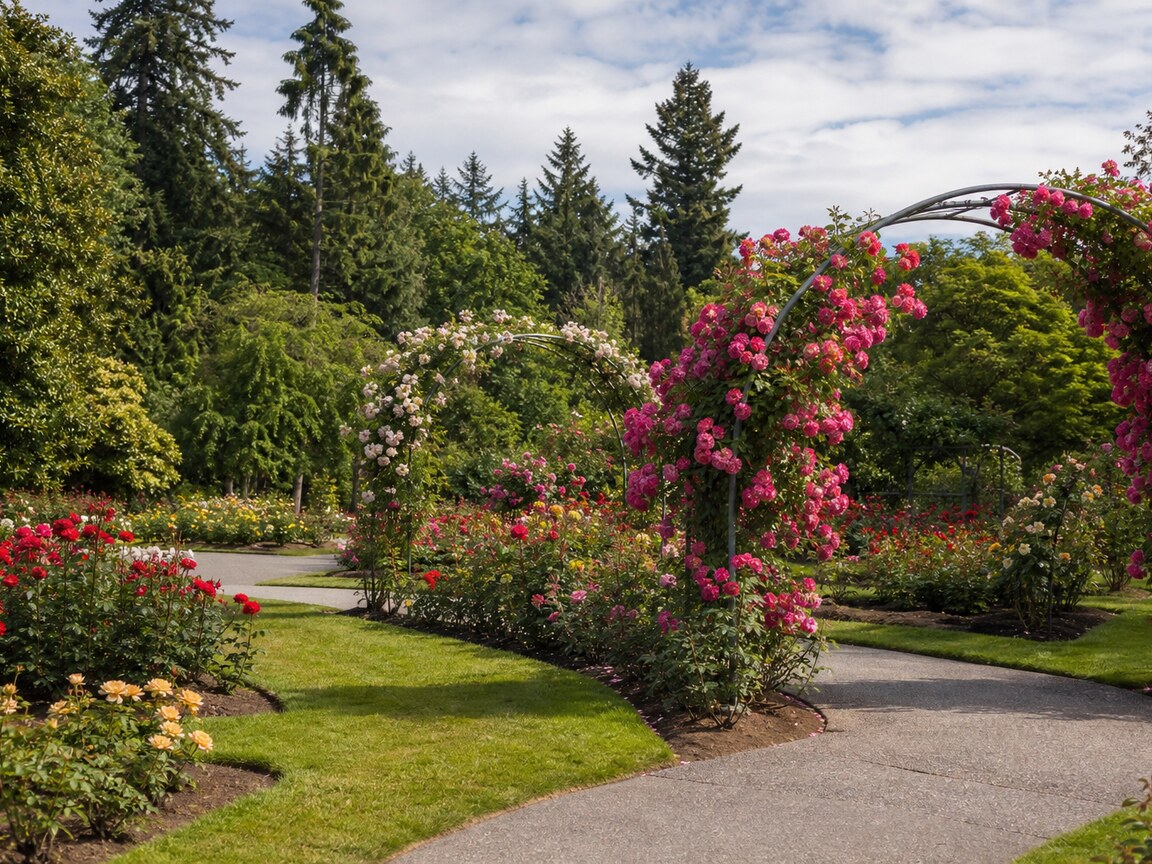
The Rose Garden in Stanley Park (610 Pipeline Road) is built around a long wooden arbour covered in climbing roses, which makes a ready-made frame for a portrait. The roses are at their fullest through June and into summer, with the surrounding beds carrying colour well into the fall. It’s a quieter alternative to the busier corners of the park, and like Queen Elizabeth Park, it’s at its best in the warm light of golden hour, when the vines catch the sun. The garden is free and open daily.
Dr. Sun Yat-Sen Classical Chinese Garden: Reflections and Quiet Corners
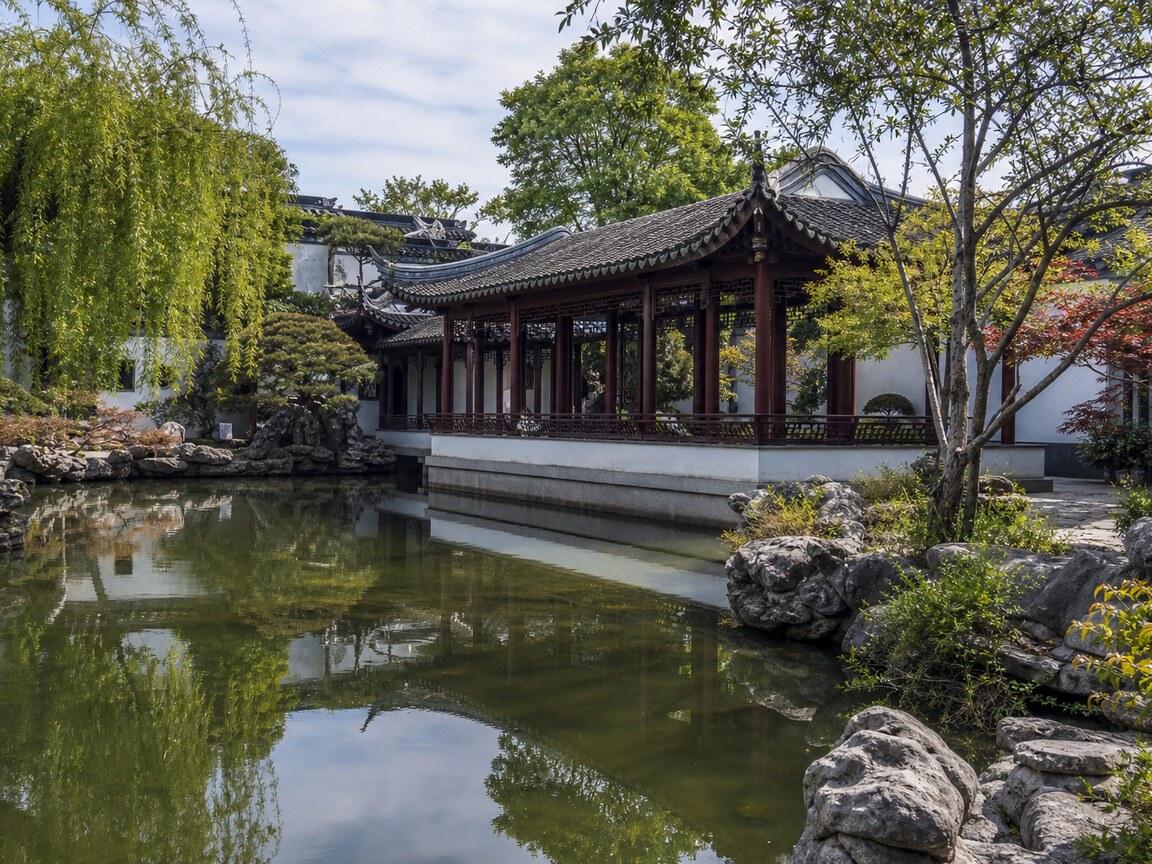
In Chinatown, the Dr. Sun Yat-Sen Classical Chinese Garden (578 Carrall Street) is a small, walled garden built in the Ming-dynasty style, with covered walkways, carved windows, and a jade-green koi pond that mirrors the pavilions. It’s one of the better spots in the city for quiet, composed shots, and it’s a popular backdrop for portraits and wedding photos. It’s a paid garden and closed Mondays, so check the hours before you go. The free public park next door shares the same pond if you want a look first.
Spanish Banks and Jericho Beach: Waterfront and Golden Hour
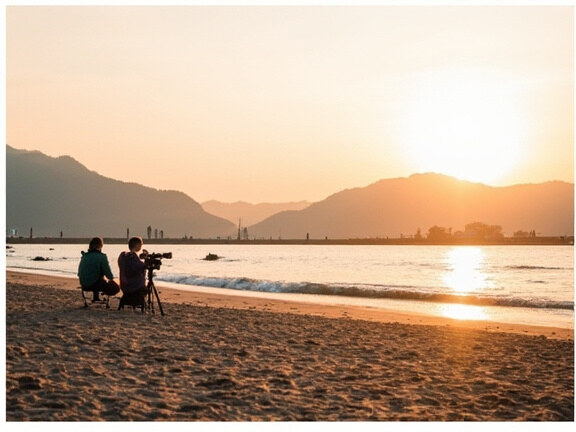
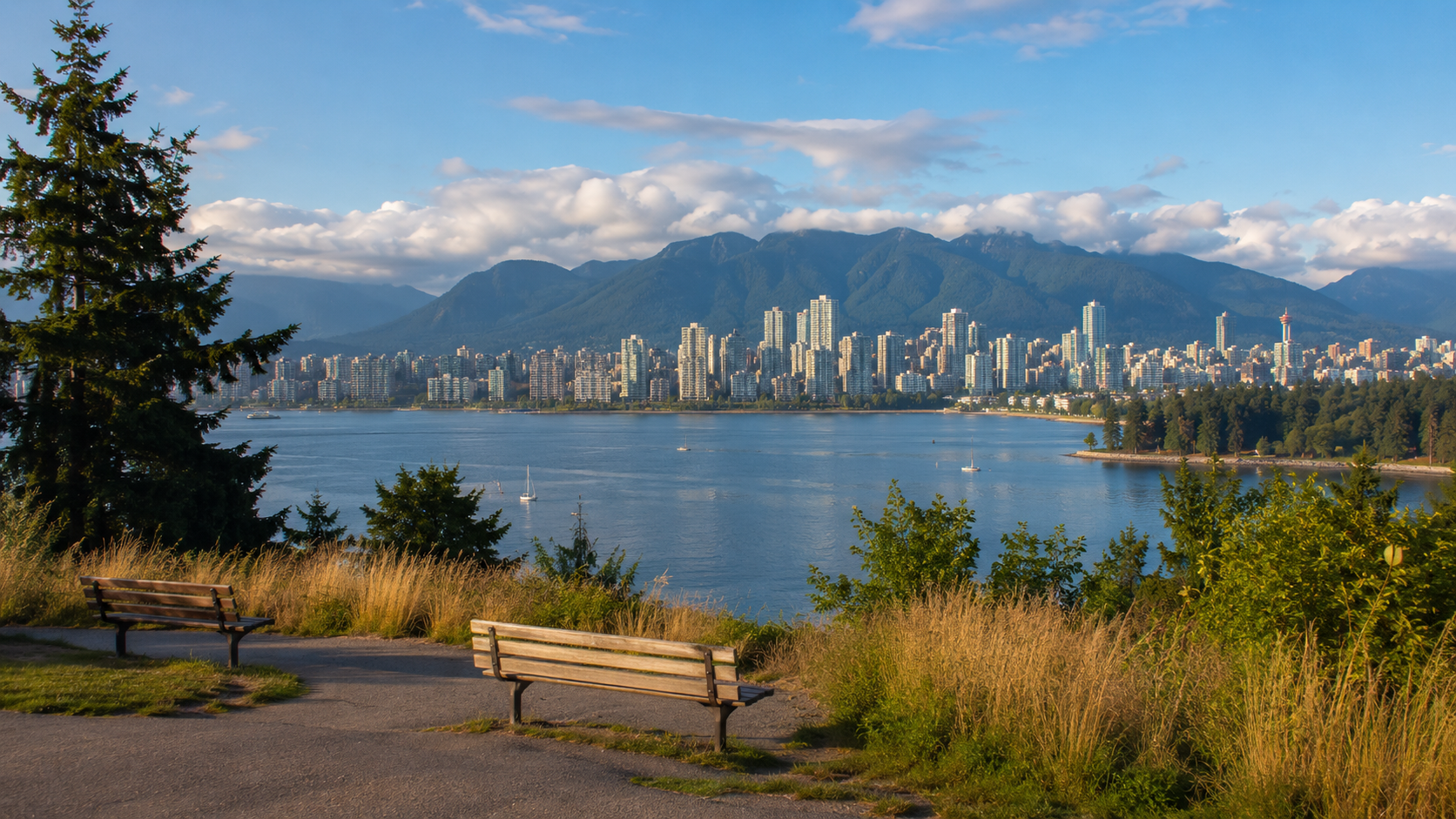
Out on the west side, Spanish Banks and the neighbouring Jericho Beach give you the city skyline and the North Shore mountains across the water, with long, open sand in the foreground. They’re quieter than Kitsilano Beach and well suited to sunset, when the light comes in low across English Bay. The tide makes a real difference here: at low tide the sand flats stretch a long way out and pick up reflections, while a high tide brings the water close to the logs along the shore. Both beaches have paid parking and washrooms, and there’s a café at Jericho if you’re settling in for the evening.
A short drive away, the totem poles at Brockton Point in Stanley Park are another classic Vancouver shot, with the poles, the water, and the skyline all in one frame.
Common Questions
What are the best times for photography in Vancouver?
Golden hour, the hour after sunrise or before sunset, gives the warmest light. Blue hour, just after sunset, suits city and architecture shots. Vancouver’s frequent overcast days are actually good for gardens and portraits, since the cloud softens the light. For blossoms, aim for late March into April; for fall colour, October into November.
Do I need a permit for a photo shoot in Vancouver?
For personal and casual photography, no. Commercial or professional shoots in city parks like Stanley Park and Queen Elizabeth Park need a permit from the Vancouver Park Board, and VanDusen and the Dr. Sun Yat-Sen garden have their own rules and fees for professional or wedding shoots. Check with the venue or the Park Board before a paid shoot.
Do I have to pay for parking?
Usually, yes. Most Vancouver beaches and parks, including Stanley Park, Spanish Banks, Jericho, Queen Elizabeth Park, and VanDusen, have paid parking by pay station, and downtown and Gastown are metered. The pay-by-phone app is the easiest way to cover it.
Which photo spots are wheelchair accessible?
Queen Elizabeth Park’s main plaza and lookout are paved and accessible, VanDusen’s main paths are largely flat, and the Stanley Park seawall is level the whole way. The classical Chinese garden has some uneven surfaces and a few steps, so it’s worth checking ahead if access is a concern.
What equipment works best for Vancouver’s outdoor light?
A few things earn their place here:
- A polarizing filter to cut glare off grey skies, water, and wet leaves.
- A sturdy tripod for blue hour, low light, and breezy waterfront spots.
- Rain protection for your gear, since the wet weather turns up often.
- A wide lens for landscapes and architecture, and a longer one for pulling the skyline in behind a foreground.