
Queen Elizabeth Park occupies the summit of Little Mountain, a rise near the geographic centre of Vancouver that happens to be the highest point in the city. Where Stanley Park gives visitors forest and shoreline and Granville Island gives them a working harbour full of studios and market stalls, Queen Elizabeth Park offers something different again: quarried stone turned into terraced gardens, a formal arboretum, and sweeping views that stretch from the North Shore mountains to the Fraser Delta on a clear day. The park was never a wilderness preserve. It was built, quite literally, out of a hole in the ground.
That hole was a pair of basalt quarries dug into Little Mountain in the early twentieth century to supply rock for the city’s roads. Once the stone was exhausted, the Vancouver Park Board turned the empty pits into sunken gardens, and over subsequent decades the wider hilltop grew into a full civic arboretum with paths, lawns, tennis courts, and a pitch and putt course. At the very top, a triodetic-domed conservatory now shelters a small tropical rainforest and a resident population of free-flying birds, a genuinely unusual thing to find at the top of a city park anywhere in Canada.
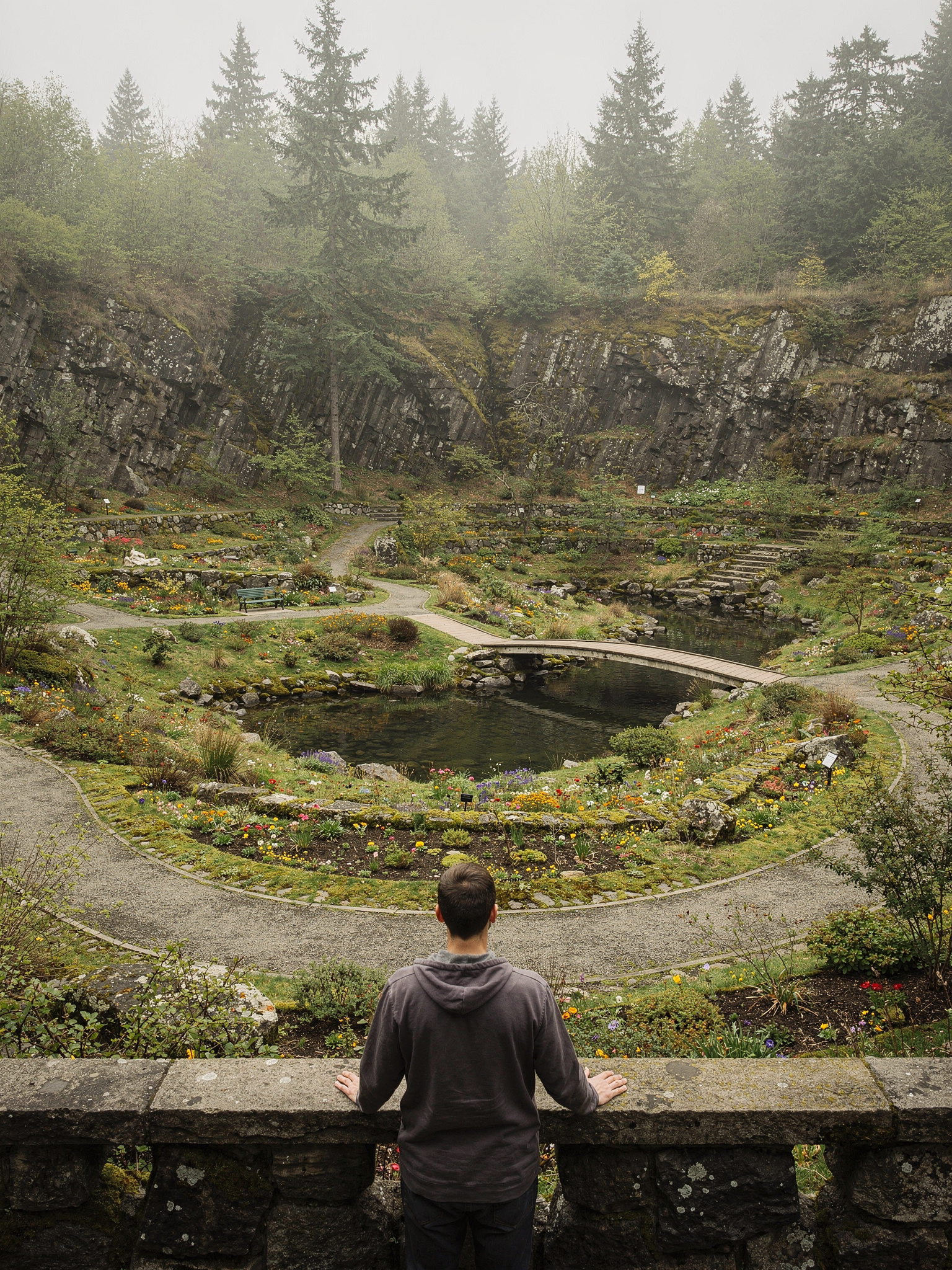
Little Mountain and the Quarry Gardens
Little Mountain rises roughly 125 metres above sea level, making the summit inside Queen Elizabeth Park the highest natural point within Vancouver’s city limits. It is not a dramatic peak by any means, more a broad hilltop, but the elevation is enough to lift visitors above the surrounding rooftops and open up views in every direction. On clear days the sightlines reach the North Shore mountains, the towers of downtown, and south across the Fraser lowlands.
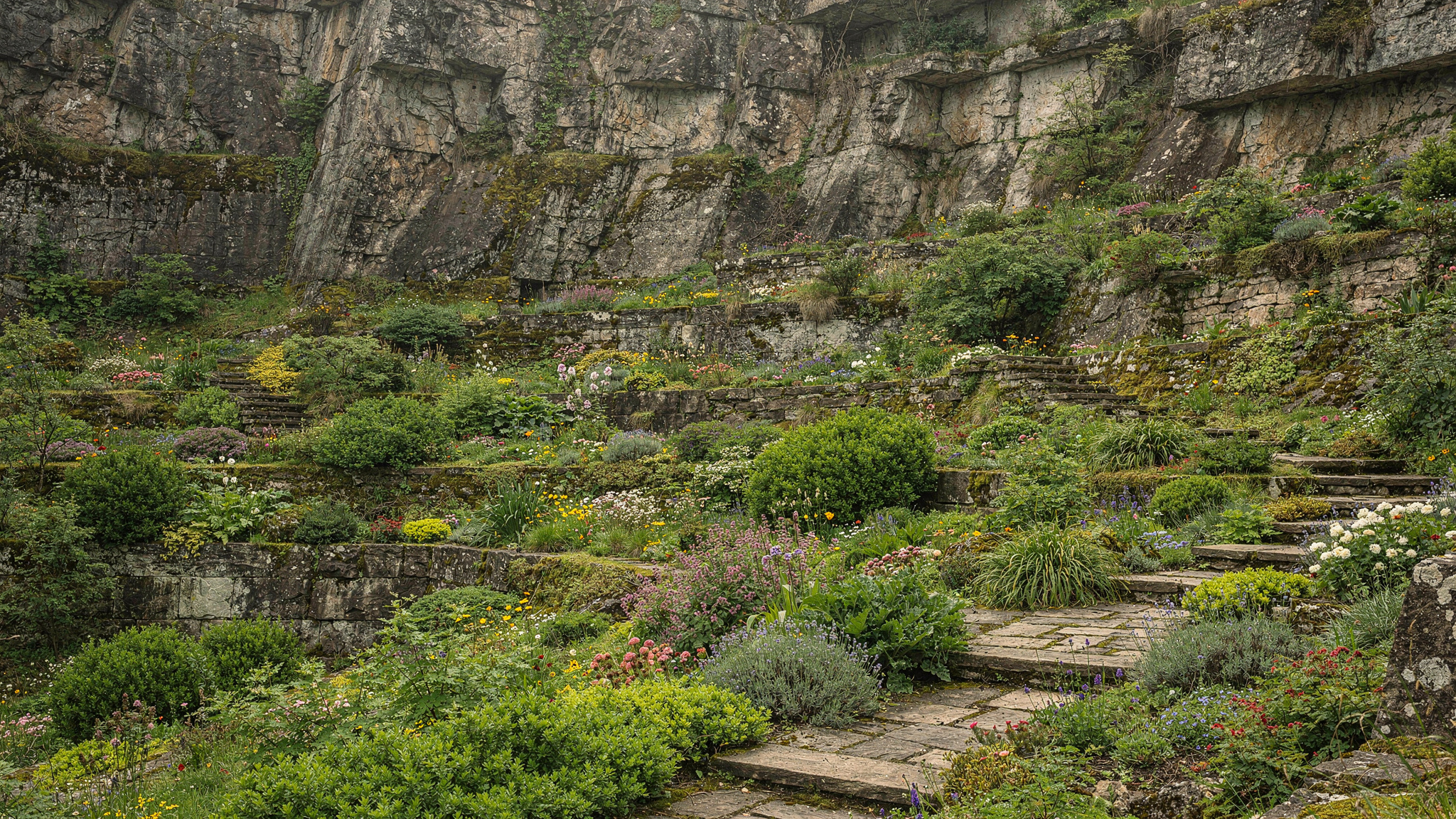
The two former quarries that give the park its most distinctive feature sit on the western side of the summit. Both were excavated for basalt used in road construction, and once the rock ran out the Park Board was left with two ugly pits rather than a garden. The idea of converting them into sunken gardens had circulated for years before it was finally carried out in the early 1960s under the direction of the Board’s deputy superintendent at the time, who oversaw the planting design that turned bare quarry walls into terraced beds of shrubs, perennials, and seasonal flower displays.
Because the gardens sit below the surrounding grade, walking down into them feels like entering a different, more sheltered space than the open lawns above. Paths wind along the old quarry faces, crossing footbridges over small ponds and following the original rock contours rather than any grid. The effect is intentionally informal, closer to a series of garden rooms than a single formal layout, and the quarry walls themselves are still visible behind the plantings in several spots.
The Bloedel Conservatory
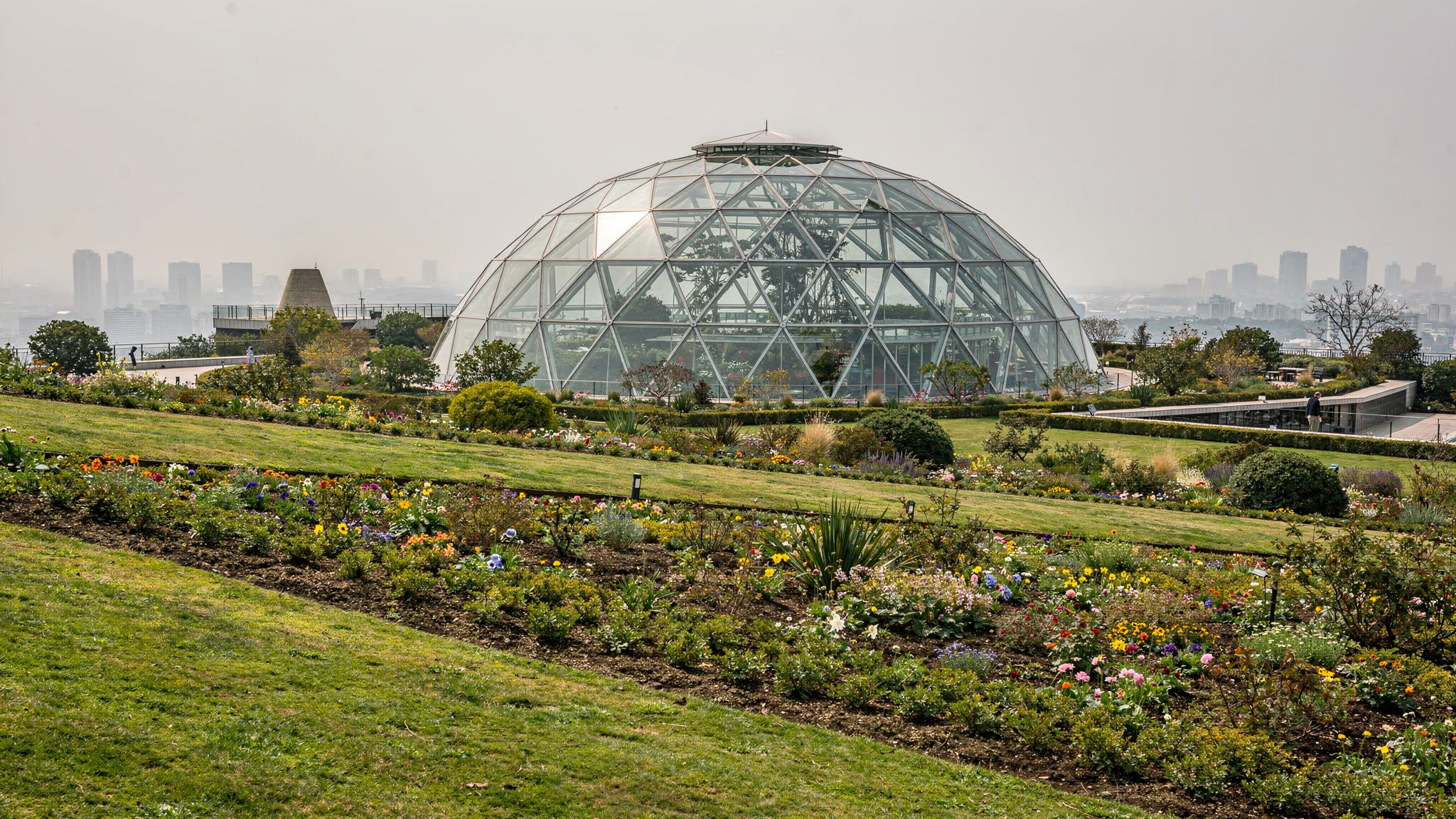
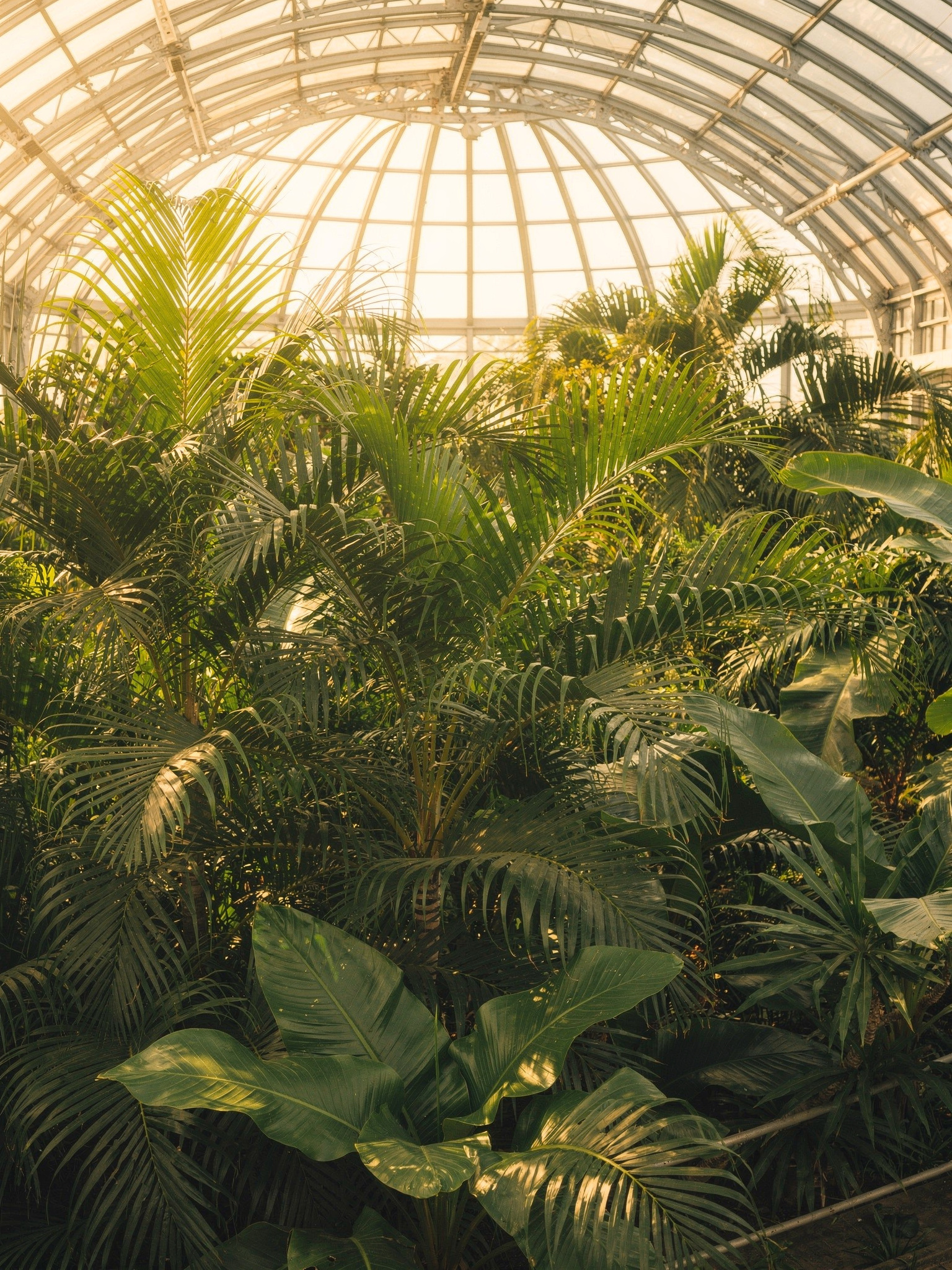
At the highest point of the park stands the Bloedel Conservatory, a freestanding triodetic dome built from aluminum tubing and hundreds of plexiglass panels. The structure was funded by a major gift from the Bloedel family alongside contributions from the city, and it opened to the public in December 1969 to enormous crowds. The dome’s design was influenced by the geodesic structures popularized at Montreal’s Expo two years earlier, and its frame was manufactured on the other side of the country before being shipped to the West Coast for assembly.
Inside, the climate is kept warm and humid year round, supporting a collection of tropical and subtropical plants alongside a population of free-flying birds that nest and roost among the foliage. Walking through the dome in the middle of a grey Vancouver winter, with parrots calling overhead and palms brushing the paths, is a deliberately disorienting experience, and it is part of why the conservatory has remained a popular stop for both visitors and locals since it opened.
The conservatory operates as a paid attraction separate from the free park grounds around it, with admission covering the plant and bird collections inside the dome. Because the interior is compact, a visit typically takes somewhere between twenty minutes and an hour depending on how long you linger, which makes it easy to combine with a longer walk through the surrounding gardens and arboretum.
Public Art and the Arboretum
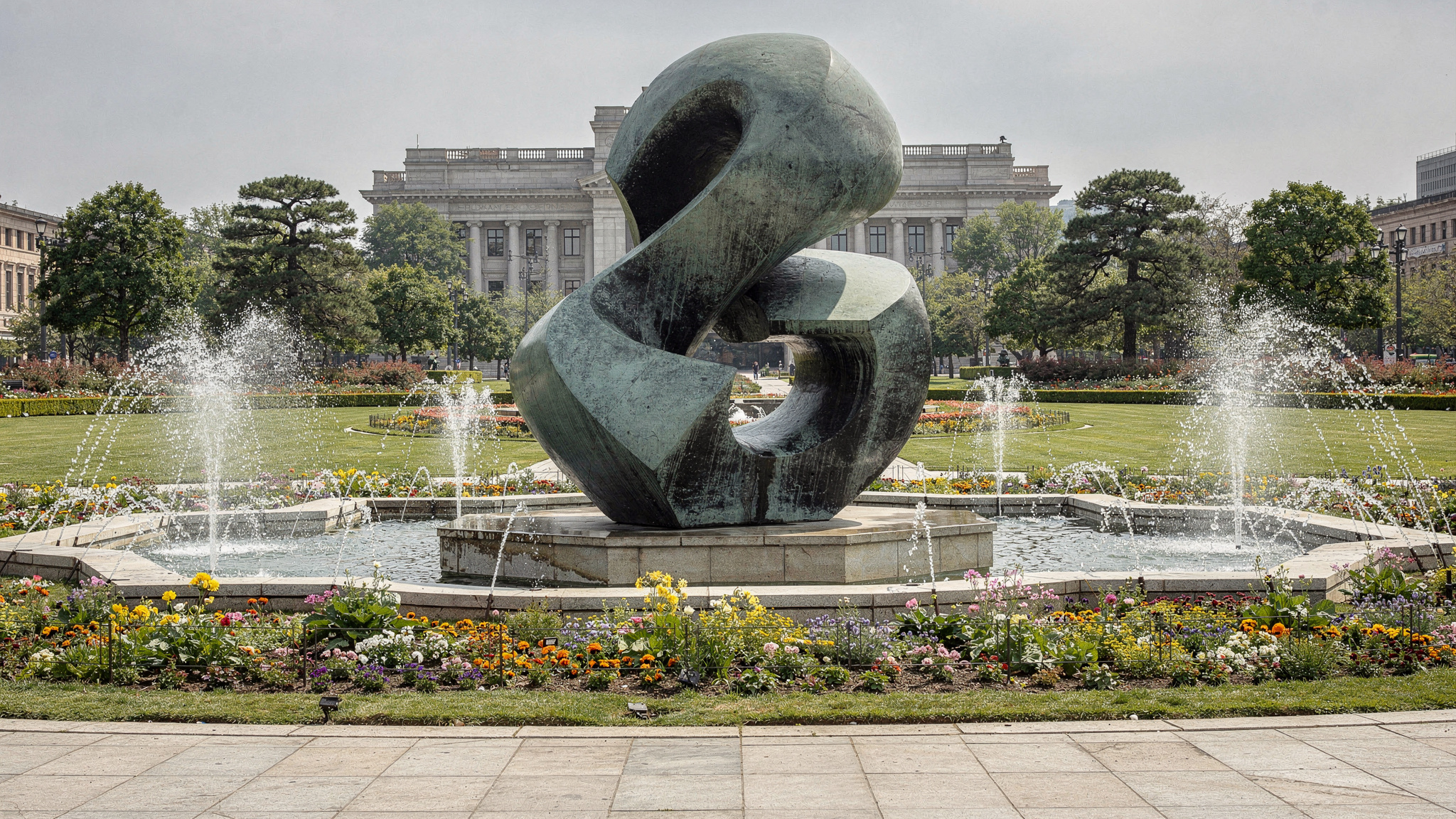
Just outside the conservatory, near the fountains on the plaza, stands a bronze cast of Henry Moore’s Knife Edge Two Piece, installed when the conservatory opened in 1969. It is one of only a handful of full-size casts of the work placed in public settings around the world, and its abstract, weathered form makes a striking contrast with the clipped lawns and formal plantings surrounding it. The plaza itself, with its fountains and wraparound views, is one of the most photographed spots in the park.
Beyond the plaza, the broader hilltop functions as Vancouver’s first civic arboretum, developed gradually over decades with donated funds and plantings from both native and introduced species. Mature specimen trees are spaced across the open lawns and along the perimeter paths, many identified with small markers, and the collection reflects decades of deliberate horticultural planning rather than leftover forest. Seasonal colour is a major draw here, from spring flowering trees through to autumn foliage.
Recreation and Practical Layout
Aside from the gardens and conservatory, Queen Elizabeth Park carries a full slate of everyday recreation facilities that make it feel like a genuine neighbourhood park as well as a destination. An eighteen-hole pitch and putt course occupies part of the grounds, popular with beginners and families rather than serious golfers, and a bank of public tennis courts sits along the park’s southern edge. Lawn bowling greens and picnic areas round out the more casual side of the park.
Seasons in the Park, a sit-down restaurant near the summit, takes advantage of the elevation with a wraparound view over the gardens and the city beyond, and it is a popular choice for special occasions precisely because of that outlook. The park’s road network loops around the summit and down through the quarry gardens, with several parking areas near the conservatory and the pitch and putt course for visitors arriving by car.
Getting to Queen Elizabeth Park
Queen Elizabeth Park sits near the geographic centre of Vancouver, well inland from both downtown and the beaches, which makes it an easy add-on to a day that also includes other central neighbourhoods. The park is served by several TransLink bus routes running along Cambie Street and Ontario Street, with stops within a short walk of the main entrances, and the Canada Line’s Oakridge-41st Avenue station is close enough for a comfortable walk for most visitors.
Driving to the park is straightforward, with entrances off both Cambie Street and Ontario Street and parking lots near the conservatory and the pitch and putt course. Parking fills up on weekends during cherry blossom season and on summer afternoons, but the lots are large enough that a spot is usually available with a short amount of patience.
Cyclists can reach the park via Vancouver’s bikeway network, though the final approach up Little Mountain involves a genuine climb from any direction, a fact that surprises visitors who assume the whole city is as flat as the seawall. The elevation gain is modest in absolute terms but noticeable after a ride across the flatter parts of the city.
Practical Tips for Visiting
The quarry gardens and arboretum are free to enter and open every day; only the Bloedel Conservatory charges admission, and it keeps its own separate hours that are worth checking before you go, since it typically closes earlier than the park grounds themselves.
Spring brings the most dramatic flower displays in the quarry gardens, while the plaza and its cherry trees are a well-known draw in late March and April. Early mornings and weekdays are noticeably quieter than weekend afternoons, particularly around the conservatory plaza.
Because the park sits on the highest ground in the city, wind and temperature at the summit can feel different from downtown. A light layer is worth carrying even on a warm day, especially in the exposed areas near the viewpoints.
Photographers should plan for the golden hour near the quarry gardens’ western edge, where the terraced plantings and city skyline line up well in late-afternoon light. The conservatory plaza is busiest around midday, so early morning visits give a better chance at uncrowded photos of the Henry Moore sculpture and fountains.
Questions Often Asked
Is Queen Elizabeth Park free to visit?
The park grounds, quarry gardens, and arboretum are free to enter at any time. The only paid attraction is the Bloedel Conservatory at the summit, which charges separate admission to see the tropical plants and birds inside the dome.
What makes Queen Elizabeth Park the highest point in Vancouver?
The park sits atop Little Mountain, a hill roughly 125 metres above sea level near the geographic centre of the city. It is the highest natural elevation within Vancouver’s boundaries, which is why the summit offers wraparound views toward downtown, the North Shore mountains, and the Fraser lowlands.
What is inside the Bloedel Conservatory?
The conservatory is a triodetic dome housing a warm, humid indoor environment with tropical and subtropical plants and a population of free-flying birds. It opened in 1969 and remains one of the only structures of its kind in a Canadian city park.
How did the quarry gardens get their name?
The gardens occupy two former basalt quarries that were dug into Little Mountain in the early twentieth century to supply rock for city roads. Once the stone was exhausted, the Park Board converted the empty pits into sunken, terraced gardens.
Can I combine a visit with other things to do nearby?
Yes. The park’s central location off Cambie Street makes it easy to pair with other stops in the surrounding neighbourhood, and the on-site pitch and putt course, tennis courts, and Seasons in the Park restaurant give visitors reasons to stay for a few hours rather than a quick photo stop.